Category: Marketing & Sales

  • Selling Digital Products Without Being Salesy 

    Selling Digital Products Without Being Salesy 

    I want to start with something I did to myself this week, because it explains this myth better than any lecture could.

    I saw a conference I genuinely wanted to attend. Good speakers, right theme, the kind of room I’d normally clear my diary for. I started filling in the form. Then I stopped. Not because I didn’t want to go. Because I had goals for the day and this, as much as I liked it, was a distraction. So I saved it. I told myself I’d come back to it tomorrow.

    That’s it. That’s the whole myth, right there, playing out in real time, except this time I was the customer, not the seller.

    Why You Keep Holding Back

    If you’re building a digital product business in Nigeria right now, coach, consultant, creator, service provider, you’ve probably said some version of this to yourself. I don’t want to be salesy. I don’t want to be in people’s faces. I don’t want to overwhelm people with my business, my product, or myself.

    It sounds responsible. It sounds like restraint. It sounds like the kind of thing a thoughtful person says.

    It’s actually a myth, and it’s costing you money.

    What’s Really Happening Underneath

    Here’s the part nobody tells you. You are not the only business in the world talking to your audience. The average person is bombarded with at least twenty pieces of advertising every single day. Messages, adverts, billboards, sponsored posts, WhatsApp broadcasts, the lot. Before lunch, most people have already scrolled past more marketing than they consciously register.

    So when you post once and hope the right person sees it, you’re not being tasteful. You’re being invisible. Yours is one message in a queue of hundreds, and if you don’t repeat it, it simply gets lost in the noise of everyone else’s noise.

    That conference I mentioned? It didn’t lose me. I saved it. I intend to come back. But if that organiser only posts about it once and never mentions it again, I genuinely might not. Not because I stopped wanting it. Because life moved and nothing reminded me.

    Your client is exactly the same. She wants what you’re selling. She also has a job, a house to run, children to feed, a business of her own to keep afloat. If her life doesn’t fall apart from not buying your course this week, she’ll deprioritise it, the same way I deprioritised that conference. Not because you failed her. Because you’re competing with her whole life, not just her attention span.

    The Mechanism: Why Repetition Isn’t Rude, It’s Maths

    This is where you need to understand the numbers, because once you see them clearly, the fear of overposting starts to look a bit silly.

    Less than 3% of the people who see your product will actually buy it. 3%. That’s not a reflection of your product being weak or your message being wrong. That’s simply how buying behaviour works, everywhere, for everyone, always.

    So if 3% convert, the only way to build real revenue is to widen the top of your funnel. You need more eyes on the offer, consistently, across more places, more often, because you’re not trying to convince the same hundred people ten times. You’re trying to reach enough new people that your 3% becomes a meaningful number.

    Posting frequently isn’t salesy. Posting frequently is just you doing the maths correctly.

    The Identity Shift You Actually Need

    Now here’s the honest bit. Some of this “I don’t want to overwhelm people” talk is really about you, not them. If you’re quietly telling yourself that showing up often makes you narcissistic, as if people are sitting there watching your every post, waiting for you to slip, that’s worth examining too. Unless you’re already a celebrity with a warm, ready audience queuing to buy, you haven’t earned the right to be quiet yet. You still have to do the work of being seen, again and again, until the people who need you actually find you.

    And if the people you serve genuinely mean something to you, this reframe matters. You’re not the person interrupting anyone’s day with unnecessary noise. You’re the entrepreneur doing everything in her power to reach the people she was called to serve. That’s not salesy. That’s responsible.

    What This Means For You Now

    The next time you feel that pull to hold back, to post less, to soften your visibility because you’re worried about being “too much,” remember the conference I saved and never went back to. Remember that twenty adverts a day is the baseline your audience is already living with, and yours has to earn its place in that noise, repeatedly, not once.

    Six weeks from now, this becomes measurable. The businesses growing steadily aren’t the ones who post the cleverest single caption. They’re the ones who understood the numbers early and kept showing up until the maths worked in their favour.

    👉 Start The 7-Day Launch Challenge — Launch Your Ebook, Masterclass or Course in 7 Days https://ceovip.eo.page/7daylaunchchallenge

    7 day launch challenge
    7 day launch challenge

    👉 Start The 7-Day Launch Challenge — Launch Your Ebook, Masterclass or Course in 7 Days.
    https://ceovip.eo.page/7daylaunchchallenge

    Watch now: Law of Attraction- How the Law of Vibration Changes Everything

    Related Posts:

    Why Successful Entrepreneurs Read This Book Twice
    Why Successful Entrepreneurs Read This Book Twice
    Read Now: The ‘One Day’ Lie: Why Waiting to Launch Is Keeping You Stuck
    9 Steps To Create & Launch 
Your Digital Products & Events Like A Pro.
    9 Steps To Create & Launch Your Digital Products & Events Like A Pro.

    Monetize your audience
    The best app to start your newsletter
    AI Master Prompts - Master ChatGPT Prompts That Help You Create Content That Sells, Even if You’re A Beginner
    AI Master Prompts – Master ChatGPT Prompts That Help You Create Content That Sells, Even if You’re A Beginner

    Still Feeling Stuck? Let’s Talk About It

    Sometimes, it’s not your idea. It’s your system.

    Let me help you see what’s missing and unlock what’s working.

    Book a call with me. We’ll go through your content and systems together.

    Call now.

    Bossmoney Formula: The Ultimate Launch Blueprint For Your Ebook, Masterclass, Online Course & Virtual Events
    Bossmoney Formula: The Ultimate Launch Blueprint For Your Ebook, Masterclass, Online Course & Virtual Events

  • Why More Visibility Isn’t The Reason You’re Not Selling

    Why More Visibility Isn’t The Reason You’re Not Selling

    I want to tell you something I say to my clients often, and it usually feels somewhere between relief and mild offence.

    You probably don’t have a visibility problem.

    I know that’s not what you were told. Somewhere along the way, someone convinced you that if the numbers aren’t moving, the answer is simply to do more. Post more. Email more. Show up on another platform you don’t even enjoy. If you’re posting twice a day, post seven times. If you’re sending ten emails a week, send fifty. I understand the logic. Scaling activity feels like progress. But before you compound anything, I need you to answer one honest question first.

    What exactly do you want to be visible for?

    ### The Wide Net Doesn’t Catch More, It Catches Confusion

    Here’s where a lot of skilled, credible people get stuck. You have real experience. You’ve helped people before. But when someone asks what you do, the answer comes out broad. Something like, I help entrepreneurs save more time and achieve their goals.

    On paper, that sounds generous. In practice, it tells your ideal client nothing. Which entrepreneurs. Real estate people, salon owners, group business owners, actors, influencers. And which goals. Personal goals, business goals, money goals, habit goals, team building goals. You’ve cast a wide net thinking the wider it is, the more fish you’ll catch.

    The problem is human beings are not fish.

    People have priorities, and those priorities are ranked. A busy mother might genuinely want to learn how to swim one day. But right now, making sure her team has the right tools and her business is stable comes first. That’s not a lack of interest in swimming. That’s a hierarchy of needs, and your offer has to know exactly where it sits in someone’s hierarchy before it can compete for their attention.

    ### Shouting Louder In The Wrong Market

    Think about walking into an electronics shop when what you actually want is a wig. Now imagine you’re the one selling wigs, standing inside that same electronics market, convinced that if you just shout louder, someone will eventually buy. You could have the best wig in Lagos. It won’t matter. You are loud in the wrong room.

    That’s what happens when visibility becomes your strategy without positioning underneath it. You’re not reaching the wrong number of people. You’re reaching the wrong people, loudly.

    ### Why Boundaries Matter More Than You Think

    This is where I want you to sit with the idea of clear boundaries, not as restriction, but as filtering. Boundaries help you filter out the rubbish, the irrelevant, the activity for activity’s sake that doesn’t move your top line or your bottom line. Without them, you end up trying to do everything, for everyone, everywhere.

    And when you scatter your energy across ten directions, nothing gets the depth it needs to actually work. Things move slowly not because you’re lazy, but because your effort is spread too thin to build momentum anywhere.

    More visibility without clear positioning doesn’t bring you better clients. It brings you more of the same friction. More conversations that go nowhere. More I’ll think about it, or it’s too expensive, or let me pray on it, from people who were never your right fit to begin with. Not because your offer lacks value, but because it never spoke to them clearly enough to matter more than their excuses.

    ### The Real Work Is Releasing The Idea That Loud Equals Understood

    Here’s the mind shift I want you to take from this. The people who genuinely need what you offer aren’t sitting there wondering if they need help. They already know that. What they’re actually asking, silently, is this. Do you understand my problem well enough to solve it for me?

    That understanding doesn’t come from volume. It comes from clarity. Until you know exactly who you are, where your value sits, and what your specific strength is, you can’t build that into a product or service that genuinely helps anyone.

    When you try to be everything to everyone, you end up being memorable to no one.

    I know the fear underneath the resistance to narrowing down. It feels like if you get specific, you’ll miss out on the people outside that lane. But you won’t. What is yours is yours, and it responds to being called by name, not shouted at from a distance.

    If you’re still in a season of soul searching, that’s fine. Your results will reflect that, scattered, inconsistent, everywhere at once, because you’re still discovering who you are and how you prefer to work. But the moment you decide, clearly, on who you serve and what you solve, you gain the ability to say it in a way that pulls in the people who are ready, willing, and able to buy from you again and again.

    That’s not a visibility upgrade. That’s a positioning decision.

    And once your positioning is clear, the systems that turn that clarity into consistent income are what we build inside the 7 Day Launch Challenge.

  • Honest Marketing Strategy That Actually Converts

    Honest Marketing Strategy That Actually Converts

    Why Honest Marketing Converts Faster Than Clever Marketing

    Most people misunderstand marketing.

    They think it is about persuasion. About saying the right words. About creating just enough pressure to push someone into buying.

    But notice what happens in real life. You walk into a store to buy sugar. Nobody convinces you to buy sugar. You already decided before you arrived.

    So the real decision is not whether you will buy. It is who you will buy from. That is where most marketing breaks down.

    The Real Role of Marketing

    Marketing is not about convincing people to want something. It is about helping them recognise that you are the right fit.

    That shift alone changes everything, because when someone already knows what they want, they are not looking for hype. They are looking for clarity.

    They are asking:

    • What exactly is this?
    • Does it match what I need?
    • Can I trust this person?

    Insight: Buyers arrive with intent.
    Mechanism: They compare clarity, not noise.
    Implication: Confusing marketing delays decisions.
    Application: Say less, but say it clearly.

    In markets like Nigeria, where trust is already fragile, this becomes even more important. People are not just buying products. They are protecting themselves from disappointment.

    Why Specificity Wins Every Time

    Think about the difference between: 

    “All natural ingredients”

    and

    “Made from 100% sugarcane, no additives”

    One sounds good.

    The other removes doubt. That is the difference between interest and action.

    When your messaging is vague, the brain fills in the gaps with uncertainty. And uncertainty delays decisions, but when you are specific, you reduce friction.

    Six weeks from now, this becomes easier to measure. The clearer your offer is, the shorter your sales cycle becomes.

    The Capacity Trap Most Experts Fall Into

    Here is where things get uncomfortable. Many coaches and consultants overpromise. Not because they are dishonest people, but because they feel pressure to compete.

    So they add:

    • Extra bonuses
    • More access
    • More support

    Even when they cannot sustain it. At first, it looks like smart marketing, but over time, it creates operational stress and client dissatisfaction.

    Insight: Overpromising creates hidden pressure.
    Mechanism: Delivery becomes inconsistent.
    Implication: Trust erodes slowly.
    Application: Match your offer to your actual capacity.

    You are already at the stage where your results depend on consistency, not intensity. If you can deliver four sessions and a structured guide, say that clearly, because the right clients are not looking for more. They are looking for certainty.

    Honesty Is a Competitive Advantage

    There is a subtle shift happening. People are getting smarter. They check reviews. They verify claims. They even cross-check information using AI.

    So the old model of inflated promises and exaggerated results is weakening, and this is where honest brands start to stand out.

    Not because they are louder, but because they are believable.

    Pay attention to where this usually shifts. The moment your communication becomes transparent, your audience relaxes, and relaxed buyers convert faster.

    The Illusion of Vanity Metrics

    It is now easier than ever to fake success. Fake testimonials. AI-generated comments. Purchased engagement.

    From the outside, everything looks impressive, but something feels off.

    Because credibility is not built on visibility. It is built on consistency.

    Insight: Visibility can be manufactured.
    Mechanism: Perception is manipulated.
    Implication: Trust becomes unstable.
    Application: Focus on proof, not performance.

    In the long term, dishonest positioning always reveals itself, and when it does, recovery is expensive.

    The Subtle Power of Transparency

    There are parts of your business that will never go viral.

    Your terms.
    Your boundaries.
    Your data policies.
    Your process.

    These are the parts that build trust. Especially when you are asking clients for:

    • Personal information
    • Financial commitment
    • Long-term engagement

    Transparency here is not optional. It is foundational, because this remains unclear, the decision stays delayed.

    People Don’t Buy Offers. They Buy Alignment.

    The goal is not to convince everyone. The goal is to be clear enough that the right people recognise themselves in your offer. Notice what happens when you explain:

    • Who it is for
    • What it includes
    • What it does not include

    You create a filter and filters are profitable, because they reduce friction, increase trust, and improve delivery outcomes.

    Honest Marketing Is Scalable Marketing

    When your messaging is honest:

    • Your expectations are aligned
    • Your delivery is cleaner
    • Your referrals improve

    That is how systems start to work. Not through pressure, but through clarity, and over time, this becomes your competitive edge.

    Because while others are trying to impress, you are building trust.

    You do not need to persuade people into buying.

    They already want solutions. Your job is to make it easy for them to choose you.

    Be clear about your offer. Be honest about your capacity. Be transparent in your communication. Because what you build on truth sustains and sometimes, this is your sign.

    What you water grows.

    👉 Start The 7-Day Launch Challenge – How to Use AI To Launch Your Ebook, Masterclass or Course in 7 Days https://ceovip.eo.page/7daylaunchchallenge

    7 day launch challenge
    7 day launch challenge

    👉 Start The 7-Day Launch Challenge — How to Use AI To Launch Your Ebook, Masterclass or Course in 7 Days.
    https://ceovip.eo.page/7daylaunchchallenge

    Watch now: Law of Attraction- How the Law of Vibration Changes Everything

    Related Posts:

    Why Successful Entrepreneurs Read This Book Twice
    Why Successful Entrepreneurs Read This Book Twice
    Read Now: The ‘One Day’ Lie: Why Waiting to Launch Is Keeping You Stuck
    9 Steps To Create & Launch 
Your Digital Products & Events Like A Pro.
    9 Steps To Create & Launch Your Digital Products & Events Like A Pro.

    Monetize your audience
    The best app to start your newsletter

    AI Master Prompts - Master ChatGPT Prompts That Help You Create Content That Sells, Even if You’re A Beginner
    AI Master Prompts – Master ChatGPT Prompts That Help You Create Content That Sells, Even if You’re A Beginner

    Still Feeling Stuck? Let’s Talk About It

    Sometimes, it’s not your idea. It’s your system.

    Let me help you see what’s missing and unlock what’s working.

    Book a call with me. We’ll go through your content and systems together.

    Because you didn’t start this business to feel burnt out.
    You started it to be in demand.
    To be paid well.
    To be known.

    It’s time your business reflects that.

    Call now.

    Bossmoney Formula: The Ultimate Launch Blueprint For Your Ebook, Masterclass, Online Course & Virtual Events
    Bossmoney Formula: The Ultimate Launch Blueprint For Your Ebook, Masterclass, Online Course & Virtual Events

  • Permission-Based Marketing Problems: Why You’re Invisible Online

    Permission-Based Marketing Problems: Why You’re Invisible Online

    There is a type of pitch I receive regularly. It comes from agencies and consultants who want to offer me something. And before they say a word about what they actually have, they run a little ritual. They tell me they have noticed something about my page. They tell me they have a solution. They say, should I send it over?

    And there I am, forced to reply yes before I have seen a single thing worth replying to.

    That extra step is what they call permission. What I call it is friction with a polished name.

    Permission-based marketing, in its original form, made genuine sense. The idea was simple: earn the right to communicate with someone before you show up in their inbox or their feed. Build trust before you sell. That principle is sound. The problem is what has happened to it in practice. The execution has become so distorted that what is now passed off as permission marketing is really just bureaucracy in disguise. It is not respect. It is delay. And it is costing a lot of people their conversions.

    When Politeness Becomes a Barrier

    Think about what actually happens when a brand forces you to initiate contact before they share their own offer. They messaged you. They started the conversation. They told you they had something relevant. And now they want you to chase them for the thing they brought up. The asymmetry is staggering, and if you pause for a moment you can see how absurd it is.

    Universities do not do this. A university promoting an MBA sends the programme details, the application link, the open day dates, and the contact number. It assumes you are a grown adult who can decide whether that information is relevant to your life. If it is not relevant, you ignore it. If it is, you act. That is how advertising has worked for decades and will continue to work.

    The billboard at the tollgate did not ask your permission before it lit up in your eyes at night. The radio ad does not pause to ask if you are ready to hear it. These are not acts of disrespect. They are businesses doing what businesses do: reaching people who might benefit from what they offer.

    Permission marketing, at its worst, has confused political correctness with genuine relationship. The result is a process designed to protect the brand from seeming pushy, at the direct expense of the person they are supposedly trying to serve.

    The Problem With Making Everything Personal

    There is another distortion worth naming here. Somewhere along the line, a belief took root that business relationships ought to be deeply personal to be legitimate. That every client should feel like they are being attended to by the founder themselves. That transactional is a dirty word.

    Consider what that belief actually demands at scale. Tony Robbins runs live masterclasses with 70,000 people attending simultaneously. If the non-transactional model were the standard, he would need to cultivate a personal relationship with each of those 70,000 people. There are not enough hours in any day, and there are not enough versions of one person to make that possible.

    People attend those masterclasses because the solution is what they came for. The transformation. The framework. The answer to the question that brought them there. The solution is the relationship. The delivery of something genuinely useful is the intimacy.

    When you go to a supermarket and pick up eggs, you are not there for the cashier. You are not there for the store owner. You are there for eggs. You get your eggs and you leave. If a warm connection happens at the checkout, that is a bonus. It is not the architecture of the transaction. And there is nothing cold or shallow about that. It is simply honest.

    Your clients are the same. They found your business because you have something they need. Your job is to make sure they can get it clearly, quickly, and without unnecessary ceremony.

    What Actually Builds Trust

    Here is what the conversation about permission marketing consistently misses: anticipation builds more trust than ritual does.

    Richard Branson used to run live webinars every single week. And every week, he would gather the questions and comments from the chat, and use them to sharpen the next presentation. The goal was simple. By the following week, he was answering questions people had not yet asked out loud. He was completing their thoughts before they formed fully. He was saying what they were already thinking, which is the most effective form of communication that exists.

    That is what builds rapport. Not the performance of politeness. Not a two-step process designed to protect the brand. Real connection comes from understanding your audience well enough that when they hear you, they feel recognised.

    The idea that your audience’s problem is unique and personal and requires individual attention before you can address it is, if we are honest, a form of commercial narcissism on both sides of the equation.

    One person believes their problem is so specific that only a bespoke conversation can begin to address it. The brand believes that simulating that bespoke conversation is the product. Neither is true. The problem you solve has been solved before, by you and by others. It is being experienced right now by thousands of people who have never met. What they need is the solution, delivered clearly, in a way that lands.

    Simplify the Process. Respect the Decision.

    What distinguishes good marketing is not warmth versus efficiency. It is clarity versus confusion. The brands that convert consistently are the ones who make it as easy as possible for an interested person to find the information they need to make a decision. Yes or no. Not twelve steps when four would have done it.

    Good marketing anticipates. It surfaces the question before the customer has to ask it. It fills in the gap between I am interested, and I understand what this is and whether it is right for me.

    That is what you are building toward, whether you are a consultant, a coach, a course creator, or anyone else whose offer lives online. The goal is a clear, accessible path from first contact to confident decision. Remove the roadblocks. Serve the information. Let the work speak.

    If you are at the stage where your message is clear but your delivery is still scattered or manual, the next step is not more permission. It is structure. It is a system. It is an offer that reaches people without you having to chase each one individually.

    👉 Start The 7-Day Launch Challenge – How to Use AI To Launch Your Ebook, Masterclass or Course in 7 Days https://ceovip.eo.page/7daylaunchchallenge

    CEOVIP
    Learn how to use AI to launch your Ebook, Masterclass or Course in 7 Days: Start The 7-Day Launch Challenge

    👉 Start The 7-Day Launch Challenge — How to Use AI To Launch Your Ebook, Masterclass or Course in 7 Days.
    https://ceovip.eo.page/7daylaunchchallenge

    Watch now: Law of Attraction- How the Law of Vibration Changes Everything

    Related Posts:

    CEOVIP
    Turn Small Audiences into Big Coaching Revenue
    Read Now: The ‘One Day’ Lie: Why Waiting to Launch Is Keeping You Stuck
    9 Steps To Create & Launch 
Your Digital Products & Events Like A Pro.
    9 Steps To Create & Launch Your Digital Products & Events Like A Pro.

    Monetize your audience
    The best app to start your newsletter

    AI Master Prompts - Master ChatGPT Prompts That Help You Create Content That Sells, Even if You’re A Beginner
    AI Master Prompts – Master ChatGPT Prompts That Help You Create Content That Sells, Even if You’re A Beginner

    Still Feeling Stuck? Let’s Talk About It

    Sometimes, it’s not your idea. It’s your system.

    Let me help you see what’s missing and unlock what’s working.

    Book a call with me. We’ll go through your content and systems together.

    Because you didn’t start this business to feel burnt out.
    You started it to be in demand.
    To be paid well.
    To be known.

    It’s time your business reflects that.

    Call now.

    Bossmoney Formula: The Ultimate Launch Blueprint For Your Ebook, Masterclass, Online Course & Virtual Events
    Bossmoney Formula: The Ultimate Launch Blueprint For Your Ebook, Masterclass, Online Course & Virtual Events

  • The ‘One Day’ Lie: Why Waiting to Launch Is Keeping You Stuck

    The ‘One Day’ Lie: Why Waiting to Launch Is Keeping You Stuck

    It’s easy to say, “One day, I’ll launch my business.”
    Or “When I have more money, time, or confidence, I’ll finally start.”

    But here’s the brutal truth: ‘One day’ is a lie that keeps you stuck in the exact same place—while others, with fewer resources and more challenges, move forward and win.

    The Psychological Trap of ‘One Day’ Thinking

    Your brain is wired for survival, not success. It craves certainty and comfort, which is why the idea of launching ‘one day’ feels safer than taking action today. But this is nothing more than a mental trick—a cognitive distortion that keeps you trapped in analysis paralysis.

    Studies in behavioural psychology show that waiting for ideal conditions is a form of procrastination masked as preparation.  According to a 2021 survey by Global Entrepreneurship Monitor (GEM), 48% of adults globally reported that fear of failure would prevent them from starting a business. However, the same report found that entrepreneurs who took the leap despite their fears were more likely to achieve success, with early-stage entrepreneurial activity being a strong predictor of long-term business survival and growth.

    Watch now: Law of Mentalism- This Ancient Law Unlocks Unlimited Business Success

    Related Posts:

    Entrepreneurs Who Refuse to Automate Are Sabotaging Their Own Success
    Entrepreneurs Who Refuse to Automate Are Sabotaging Their Own Success

    The Real Cost of Waiting

    Every day you wait, you’re not just delaying success—you’re actively losing opportunities.

    • Lost Income: If your business could generate just ₦500,000 per month, every month you wait is ₦500,000 gone forever. That’s ₦6 million a year in missed revenue.
    • Lost Market Position: While you hesitate, competitors are building their audience, securing clients, and strengthening their brand authority.
    • Lost Confidence: Action builds confidence, not the other way around. The longer you wait, the more your self-doubt grows, making it harder to start at all.

    Case Study: The Entrepreneur Who Stopped Waiting

    Take Tunde, a Lagos-based consultant who spent three years telling himself he’d launch ‘one day.’ When he finally did, he realised that he could have started much earlier—because most of what he was waiting for didn’t actually matter.

    Within six months, he built a six-figure business. The only thing holding him back was his own mindset.

    The Hidden Opportunity Cost of Delaying Action

    Most people underestimate the compounding effect of lost time. Every day you delay is not just a day wasted—it’s a multiplier of lost potential.

    Let’s break it down:

    • If you start today and generate just ₦10,000 in your first week, that’s ₦40,000 in a month.
    • If you keep improving, scaling, and reinvesting, in six months, that could grow to ₦500,000 per month.
    • Now imagine you waited six months before starting—that’s ₦3 million lost potential revenue, gone before you even begin.

    The longer you wait, the more that lost potential accumulates.

    Why Action Always Beats Perfection

    Jeff Bezos didn’t wait for perfect conditions to launch Amazon. Neither did Aliko Dangote when he started trading cement. Every major business started with imperfect action.

    Additionally, the study highlighted that 70% of startups that succeeded within their first three years had launched an initial version of their product within six months of ideation, even if it was incomplete. These companies used rapid iteration to improve, while those that delayed their launch struggled to gain traction..

    The Fear That Keeps You Stuck

    Most people don’t realise that the real reason they delay isn’t a lack of time, money, or skills—it’s fear of failure and judgment.

    • “What if I fail?”
    • “What if people laugh at me?”
    • “What if I’m not good enough?”

    These thoughts are not facts. They are mental roadblocks designed to keep you in your comfort zone. But comfort zones don’t create success—taking calculated risks does.

    9 Steps To Create & Launch 
Your Digital Products & Events Like A Pro.
    9 Steps To Create & Launch Your Digital Products & Events Like A Pro.

    The Science of Fear and Success

    A 2021 study published in the Journal of Business Venturing —a leading academic journal—found that entrepreneurs who adopt a “growth mindset” and view failure as a learning opportunity are significantly more likely to persist and succeed compared to those who see failure as a reflection of their abilities or readiness.

    The study surveyed over 500 entrepreneurs across Africa and found that those who reframed failure as feedback were 70% more likely to persevere through challenges and ultimately achieve business success. The researchers emphasized that this mindset shift helped entrepreneurs treat setbacks as valuable lessons, enabling them to refine their strategies and improve decision-making.

    Monetize your audience
    The best app to start your newsletter

    Breaking Free from the ‘One Day’ Lie

    1. Start with What You Have

    You don’t need a perfect website, a massive budget, or years of experience. You just need one offer and one client. Build from there.

    2. Set a 30-Day Launch Deadline

    No more waiting. Pick a date in the next 30 days and commit to launching, no matter what. Publicly announce it for accountability.

    3. Shift from Learning to Doing

    Many people hide behind learning as an excuse not to act. Instead of consuming endless courses, apply what you already know and refine it as you go.

    4. Embrace Failure as Data

    Fear of failure is fear of feedback. Every mistake brings insights that improve your next move. Fail fast, learn fast, win faster.

    5. Surround Yourself with Action-Takers

    Your environment shapes your results. If you’re around people who always talk but never act, you’ll stay stuck. Join communities of entrepreneurs who are executing and winning.

    Conclusion: Success Belongs to Those Who Move

    The difference between those who succeed and those who don’t isn’t intelligence, money, or luck—it’s speed of implementation.

    If you’ve been waiting for the right time, this is your wake-up call: ‘One day’ is today.

    Stop waiting. Start building. Your future self will thank you.


    At CEOVIP, get your ideas seen and heard by the people who need them. 

    We automate your content so you can focus on closing deals, creating, and scaling your impact—without the tech headaches. 

    We handle the backend so you have more time to grow your business, make money, and enjoy your freedom.

    Time is money. Stop wasting it on tech struggles. 

    Call now.

    Bossmoney Formula: The Ultimate Launch Blueprint For Your Ebook, Masterclass, Online Course & Virtual Events
    Bossmoney Formula: The Ultimate Launch Blueprint For Your Ebook, Masterclass, Online Course & Virtual Events

  • Entrepreneurs Who Refuse to Automate Are Sabotaging Their Own Success

    Entrepreneurs Who Refuse to Automate Are Sabotaging Their Own Success

    Most entrepreneurs say they want freedom. They want to wake up to an inbox full of payments, spend their mornings on creative strategy instead of admin tasks, and grow a business that runs whether they’re online or not.

    But when it comes to actually letting go?

    They hold on—tighter than ever.

    They rewrite emails obsessively.
    They manually post content every single day.
    They double-check every task, convinced that if they don’t, something will go wrong.

    And if you’re honest with yourself, you’ve probably done the same.

    The belief that fuels this?

    “If I stop handling everything myself, my business will collapse.”

    But here’s the truth:

    Automation isn’t abandonment—it’s trust.
    Trust in the systems you’ve built.
    Trust in the strategy that got you here.
    Trust that showing up consistently is more powerful than showing up perfectly.

    Because the fear of letting go is costing you more than you realise.

    Watch now: 3 Reasons You’re Not Achieving Your Goals

    Related Posts:

    Win big with automation
    Read now

    Control Is an Illusion – And It’s Costing You Growth

    Micromanagement isn’t security. It’s a slow, silent business killer.

    When you insist on doing everything yourself, you think you’re protecting quality—but in reality, you’re limiting your own success.

    Here’s what this constant control is secretly stealing from you:

    • Time: Every minute spent on manual tasks is a minute stolen from high-level strategy.
    • Scalability: If your business can’t function without you, it will never grow beyond you.
    • Energy: Burnout doesn’t make you a high performer—it makes you an exhausted, ineffective one.

    Most successful entrepreneurs don’t work harder. They work smarter. They focus on high-impact decisions and delegate everything else— especially the repetitive tasks that drain energy.

    And that’s exactly what automation does.


    The Client Who Let Go – And Scaled Effortlessly

    I once worked with a client who never micromanaged her emails.

    We created a simple, structured content calendar, and as long as the emails went out weekly, she was happy.

    She didn’t ask for last-minute changes.
    She didn’t obsess over whether the subject line was “perfect.”
    She understood that consistency beats perfection—every single time.

    The result?

    • Higher open rates
    • More engaged subscribers
    • Increased revenue without increasing her workload

    Because while most entrepreneurs waste time fixating on minor details, the ones who scale focus on momentum.

    And that’s the real secret: Action beats analysis. Consistency beats control.

    The Psychology of Automation – Why It Works

    Warren Buffett once said:

    “It takes 20 years to build a reputation and five minutes to ruin it. If you think about that, you’ll do things differently.”

    Most people interpret this as a warning against mistakes.

    But high-performing entrepreneurs understand: It’s not about avoiding failure—it’s about showing up consistently enough that your wins outweigh your losses.

    Your brand’s reputation isn’t built on one perfect email.
    It’s built on showing up again and again—even when you’re not online.

    That’s exactly what automation allows you to do.

    9 Steps To Create & Launch 
Your Digital Products & Events Like A Pro.
    9 Steps To Create & Launch Your Digital Products & Events Like A Pro.

    The Hidden Power of Automation – What You Gain When You Let Go

    When you automate, you’re not losing control. You’re gaining freedom.

    Here’s how the right systems create effortless business growth:

    1. Email Sequences That Sell – Even While You Sleep

    Most entrepreneurs send emails manually, thinking it makes them more “personal.”

    But the reality?

    You’re losing money every time you forget, delay, or send an email that wasn’t strategically planned.

    Instead, a well-crafted email sequence:
    ✅ Nurtures your audience automatically
    ✅ Warms up cold leads without effort
    ✅ Closes sales even when you’re not working

    And the best part? It runs 24/7, without you lifting a finger.

    Read More: What’s Holding You Back? Overcoming Common Business Challenges

    2. Social Media That Works Without You

    Posting daily isn’t the real problem.

    Thinking you have to do it manually is.

    High-growth brands don’t waste time logging in every day to post. They batch content, schedule in advance, and let automation handle distribution.

    Instead of spending hours manually uploading posts, a smart social media system:
    ✅ Keeps your brand visible without draining your energy
    ✅ Ensures consistency, so your audience never forgets you
    ✅ Saves hours every week that can be spent on revenue-generating activities

    3. Sales Funnels That Convert Without Your Involvement

    If you’re still manually chasing every lead, you’re holding your business back.

    A strong sales funnel allows you to:
    ✅ Capture leads automatically
    ✅ Nurture potential clients without extra effort
    ✅ Sell on autopilot, so revenue flows in whether you’re working or not

    This is why the most successful businesses aren’t the ones with the best ideas.

    They’re the ones that know how to scale without burnout.

    Monetize your audience
    The best app to start your newsletter

    Your Business Won’t Collapse – It Will Expand

    Letting go is scary. But holding on too tightly is even riskier.

    Automation isn’t about replacing your business’s soul—it’s about removing the friction that stops it from growing.

    • Automate repetitive tasks.
    • Detach yourself from daily operations.
    • Focus on what truly moves the needle.

    Because you didn’t start your business to be trapped by it.

    You started it for freedom.

    And the moment you trust the systems you’ve built—that freedom becomes yours.


    At CEOVIP, get your ideas seen and heard by the people who need them. 

    We automate your content so you can focus on closing deals, creating, and scaling your impact—without the tech headaches. 

    We handle the backend so you have more time to grow your business, make money, and enjoy your freedom.

    Time is money. Stop wasting it on tech struggles. 

    Call now.

    Bossmoney Formula: The Ultimate Launch Blueprint For Your Ebook, Masterclass, Online Course & Virtual Events
    Bossmoney Formula: The Ultimate Launch Blueprint For Your Ebook, Masterclass, Online Course & Virtual Events

  • Email Marketing Feels Impossible—Why Aren’t Sales Growing?

    Email Marketing Feels Impossible—Why Aren’t Sales Growing?

    You launched your business dreaming of freedom—more clients, more revenue, more control. Yet here you are, staring at an inbox full of unopened emails, wondering why your email marketing isn’t delivering the sales you expected. 

    It’s not supposed to feel this hard, right? You’ve followed the advice—crafted subject lines, segmented lists, sent offers—but the numbers don’t lie. Your open rates limp along, and your sales? Barely a trickle. What’s gone wrong? The truth stings: effort doesn’t equal results. And if you’re honest, that gap between what you do and what you get is eating at you.

    Let’s flip the script. What if email marketing isn’t the problem—what if it’s you? 

    Not your skills, but your assumptions. You believe more emails mean more sales. You think persistence pays off. But when was the last time persistence turned silence into cash? This isn’t about working harder; it’s about working smarter. And right now, your strategy’s leaving you stuck—watching competitors thrive while you’re left refreshing analytics, hoping for a miracle. 

    Let’s unravel why your email marketing feels impossible and, more importantly, how to make it a sales machine.

    Watch now: 3 Reasons You’re Not Achieving Your Goals

    4 Email Marketing Struggles
    4 Email Marketing Struggles

    The Hidden Trap: Why Email Marketing Feels Like a Losing Battle

    You’re a service pro—maybe a consultant, coach, or agency owner Or maybe you offer professional services. You’ve got expertise, a solid offer, and a list of subscribers. So why does every campaign feel like shouting into a void? Here’s the kicker: you’re not alone. 

    Let’s talk about Aisha, a Lagos based business coach. She spent months building a list of 2,000 subscribers—workshops, webinars, the lot. Her first big email campaign? A sleek, value-packed newsletter with a £500 coaching package. She hit send, expecting a flood of bookings. Two weeks later: three opens, zero sales. “I thought email marketing was the way to grow,” she told me, voice tight with frustration. 

    Sound familiar? Aisha’s story isn’t rare—it’s the norm. And it’s not because her offer was weak. It’s because her emails didn’t connect.

    Here’s where the tension bites: you’ve been told email marketing is simple—write, send, profit. But if it’s so simple, why are you still chasing your tail? The real issue isn’t your list size or your product. It’s the mental block whispering, “They don’t care.” And that doubt? It’s sabotaging everything.

    The Psychology of Silence: Why Subscribers Ignore You

    Let’s get real. A 2023 report from Gated’s Inbox Intelligence showed that 82% of people miss important emails because their inboxes are too cluttered. With over 361.6 billion emails sent and received daily (Statista, 2023), subscribers are likely skimming or skipping due to volume, not disinterest.

    Attention is gold. Your email lands in their inbox next to 50 others—bills, client demands, family WhatsApp pings. Why should they open yours? You assume they’ll see value. They don’t. They see noise.

    You think, “I’m giving them solutions—why aren’t they biting?” The clash between your effort and their apathy creates a psychological itch. You start second-guessing: Is my offer rubbish? Am I rubbish? Stop. It’s not you—it’s human nature. People don’t buy what you sell; they buy what moves them. And right now, your emails aren’t moving the needle.

    Take Chinedu, an Abuja-based digital marketer. He sent weekly emails pitching his £200 website audits. Months passed—crickets. Then he switched gears. Instead of “Hire me,” he wrote a story: “Last week, a client lost ₦5 million because their site crashed during a sale. My audit could’ve saved them.” Open rates jumped to 25%. Sales? Five audits in a week. Why? He tapped into fear, desire, and urgency—core behaviours your brain can’t ignore.

    The Big Lie: More Emails Equal More Sales

    You’ve bought the hype: send more, sell more. But let’s twist that belief. What if more emails just mean more noise? Flooding inboxes doesn’t build trust—it builds resentment. Your subscribers aren’t goldfish; they remember the last five emails you sent with no reply. Push too hard, and they’ll tune you out—or unsubscribe.

    So why do you keep doing it? Because it feels productive. It’s a comfort blanket for the fear that slowing down means losing out. But here’s the provocative twist: less can be more. When you send fewer, sharper emails—emails that hit pain points, spark curiosity, or promise transformation—you’re not just another ping. You’re the one they want to open.

     Cracking the Code: Make Email Marketing Sell for You

    Enough of what’s broken—let’s fix it. You don’t need a bigger list or fancier tools. You need a shift. Email marketing that sells isn’t about volume; it’s about connection. Here’s how to turn impossibility into inevitability:

    1. Hook Their Brain, Not Their Inbox  

    Campaign Monitor’s 2024 data reveals that subject lines evoking curiosity or urgency achieve 22% higher open rates than neutral ones. “Bleeding Cash” sparks unease and a need to know more—classic NLP-style brain hooks—while “Grow Your Revenue” leans on a bland promise that’s easily ignored.

    2. Tell Stories That Stick  

    Those moments didn’t just pass the time; they gripped you, shaped how you saw the world and stuck with you long after the pages closed. Why? Because stories don’t just inform—they pull you in, spark emotions, and lodge themselves in your memory like anchors.

    Now, apply that to your subscribers. 

    Your subscribers won’t just read it—they’ll feel it, remember it, and act on it. Stories don’t just sell; they stick like glue in a distracted world.

    3. Agitate, Then Solve  

    Stir their pain, then soothe it. “Your competitors are cashing in while your emails flop—here’s the one tweak that doubles clicks.” This isn’t manipulation; it’s motivation. You’re showing them the gap—and the bridge.

    Monetize your audience
    Monetize your audience

    Why This Works

    Here’s the quiet brilliance: these tweaks don’t just change your emails—they change you. When you stop chasing opens and start sparking reactions, you’re not begging for attention—you’re commanding it. That’s power. It’s the universal principle of influence: people move toward what stirs them, not what bores them. Your brain locks onto vivid stories—loss, triumph, possibility—like a moth to flame. And when your subscribers feel that pull, they don’t just read. They act.

    Picture Aisha again. After her flop, she tried one last campaign: “Stop Losing Clients to Silent Emails.” She shared her own failure, then her fix. Opens hit 22%. Sales? ₦1.2 million in a month. She didn’t grind harder—she got clever. You can too.

     Why Keep Struggling When You Don’t Have To?

    Let’s land this. You’re not here to send emails for the sake of it—you’re here to grow your service business. But if email marketing feels like a brick wall, it’s not because you’re failing. It’s because you’re fighting human nature with outdated moves. More emails won’t save you. Smarter ones will.

    Ask yourself: How long can you afford to watch sales limp along?

    Every day you stick with what’s broken, you’re leaving money on the table—money your competitors are happily pocketing. Flip the switch. Craft emails that hook, stir, and sell. 

    You have the tools now—use them.

    Your next campaign could be the one that changes everything. Not because it’s louder, but because it’s better. So why aren’t your sales growing? They will—when you stop guessing and start connecting. 

    Are you ready to make email marketing your superpower? The choice is yours.


    At CEOVIP, get your ideas seen and heard by the people who need them. 

    We automate your content so you can focus on closing deals, creating, and scaling your impact—without the tech headaches. 

    We handle the backend so you have more time to grow your business, make money, and enjoy your freedom.

    Time is money. Stop wasting it on tech struggles. 

    Call now.

    Bossmoney Formula: The Ultimate Launch Blueprint For Your Ebook, Masterclass, Online Course & Virtual Events
    Bossmoney Formula: The Ultimate Launch Blueprint For Your Ebook, Masterclass, Online Course & Virtual Events

  • 3 Steps to Increase Your Revenue This Season

    3 Steps to Increase Your Revenue This Season

    The new year is a season of fresh beginnings, renewed ambitions, and—let’s be honest—a golden opportunity to boost your income. But let me ask you this: Is your business ready to capitalise on this momentum, or are you still clinging to last year’s strategies that no longer work?

    In Nigeria, consumer spending consistently spikes at the start of the year, with billions flowing into new ventures, lifestyle upgrades, and self-improvement initiatives (PwC Nigeria, 2024). If you’re not actively capturing your share, it’s time for a transformative shift. As you explore these three actionable steps, you will quickly understand how to dominate the market and increase your revenue in 2025.

    Related Posts:
    7 Easy Ways to Make Customers Trust You

    The Truth About Your Customers & Where They Are 

    1. Package Your Offers Like a New Year Resolution Kit

    Have you ever noticed how a simple idea becomes irresistible when tied to a fresh start? The same principle applies to your products and services. Create bundles or themed offers that resonate with the “New Year, New Me” mindset.

    Case Study: Meet Chioma, a fitness coach in Lagos. Last year, she struggled to attract clients for her individual training sessions. This year, she launched a “2025 Fitness Reset” package, which included customised workout plans, meal guides, and access to group accountability calls—all at a discounted rate. The result? Chioma doubled her client base within the first quarter.

    Core Mental Block: “Bundling means giving away too much value.”

    Reality Check: Customers are more likely to invest in packages that solve multiple problems at once. Bundling increases perceived value and encourages customers to spend more.

    Expanding the Bundling Strategy

    Think beyond simple bundles. Consider adding exclusive perks or bonuses that align with your target audience’s aspirations. For example, if you’re a life coach, offer a “Vision Board Planning Kit” with templates and step-by-step guides as part of your premium package. This not only enhances value but also creates a tactile, memorable experience.

    2. Create a Sense of Urgency

    Nothing motivates action like the fear of missing out (FOMO). Limited-time offers, countdown timers, and flash sales can trigger a psychological response that propels customers to act quickly.

    Real-World Tip: Use phrases like “Only 10 slots left for January” or “Special pricing ends on 15 January” in your campaigns. When a popular Nigerian furniture retailer ran a “New Year Clearance Sale” with a three-day countdown, they recorded a 35% increase in sales compared to the same period last year.

    How to Amplify Urgency

    Combine urgency with exclusivity. For instance, offer early-bird discounts for services booked in January, coupled with a free consultation or add-on service for the first 20 clients. This dual approach heightens the psychological need to act immediately.

    3. Upsell and Cross-Sell Like a Pro

    Do you know why e-commerce giants always recommend, “Customers also bought this”? Because upselling and cross-selling work. Offer complementary products or premium versions of what customers are already buying.

    Example: If you’re a business coach selling strategy sessions, offer an add-on for a personalised action plan or a discounted ticket to your next masterclass. A 2024 study by McKinsey revealed that businesses employing upselling strategies see a 10-30% revenue boost.

    Advanced Techniques for Upselling

    Utilise behavioural cues to personalise your upsell offers. For instance, if a client purchases a social media audit, suggest a six-month content strategy plan. Personalisation makes the offer feel tailored, increasing the likelihood of acceptance.

    Create & Launch Your Digital Product (ebooks, masterclasses, online courses & events) Like A Pro
    Create & Launch Your Digital Product (ebooks, masterclasses, online courses & events) Like A Pro

    Bonus Tips to Start 2025 Strong:

    Partner with Local Vendors

    Collaborating with other businesses can expand your reach. For instance, a wedding planner can team up with a caterer to offer comprehensive event packages.

    Leverage Online Marketplaces

    List your services on platforms like Fiverr and Upwork. These platforms already attract significant traffic, making them ideal for capturing new clients.

    Create Memorable Experiences

    Stand out by offering something beyond products—like a live webinar, interactive digital experience, or customisable packages that align with New Year goals.

    Master Emotional Marketing

    Tap into the emotional aspirations of your audience. For example, frame your services around empowerment, transformation, or achieving dreams. Use testimonials and success stories that mirror your target audience’s challenges and triumphs.

    Envision Your 2025 Success

    Imagine that at the end of January your business is buzzing with activity. Your customers are raving about the value they’ve received, and your bank account reflects the rewards of your hard work. It’s not just a possibility—it’s your reality when you apply these strategies.

    But don’t stop here. Understand that the key to sustained success lies in constant innovation. Keep testing new ideas, refining your offers, and staying attuned to your customers’ evolving needs.

    This is the year to take charge. Commit to packaging irresistible offers, creating urgency, mastering upselling, and delighting your audience at every turn. Your 2025 success story starts now.


    Ready to level up your business? Let’s make it happen.

    At CEOVIP, experience bigger and faster results through our AI-powered marketing strategies. Schedule a call today to get your customised digital marketing blueprint to reach more people.

    Bossmoney Formula: The Ultimate Launch Blueprint For Your Ebook, Masterclass, Online Course & Virtual Events
    Bossmoney Formula: The Ultimate Launch Blueprint For Your Ebook, Masterclass, Online Course & Virtual Events

  • Is Your Online Store Getting Enough Traffic This Holiday?

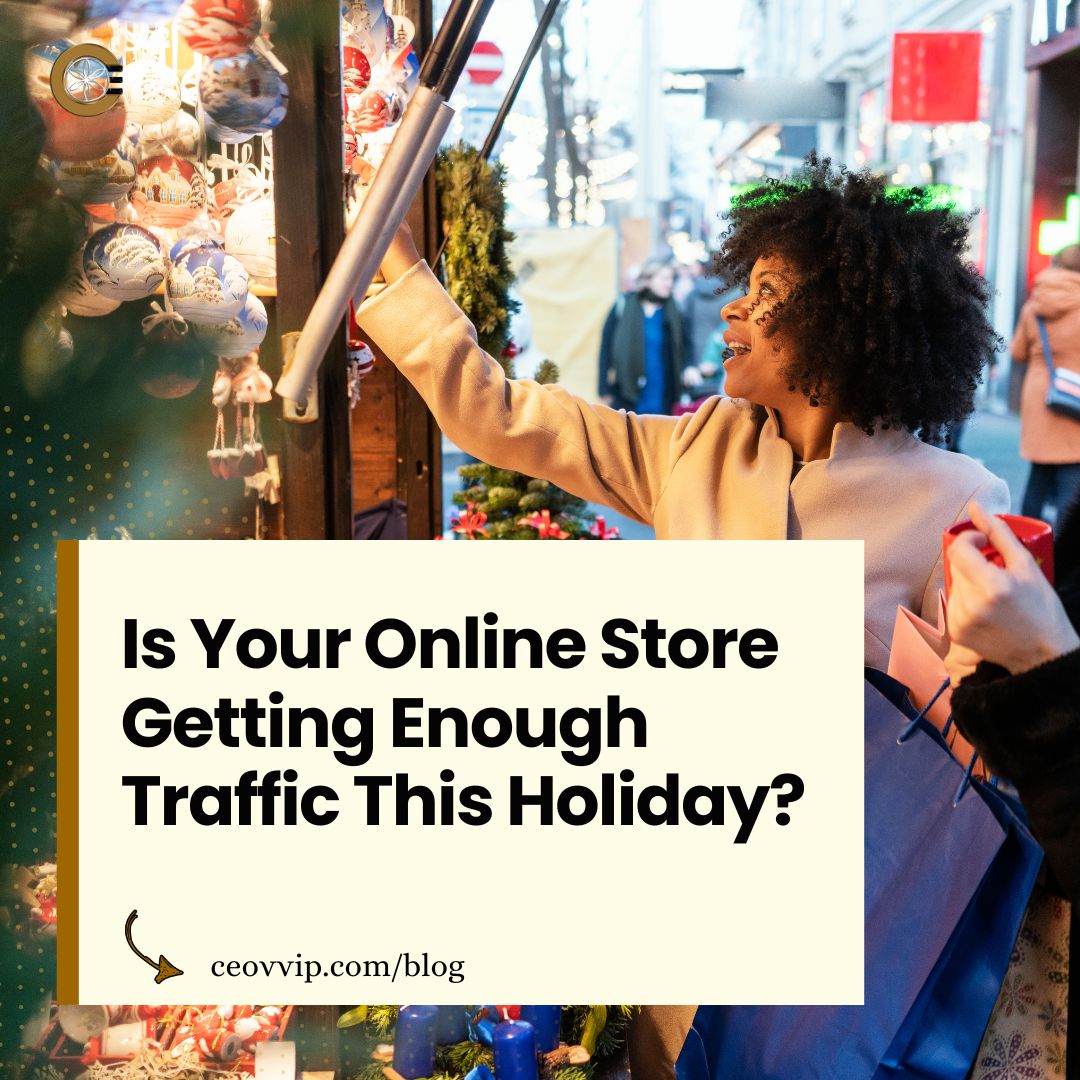
    Is Your Online Store Getting Enough Traffic This Holiday?

    The holidays are here, and the streets are alive with jingling bells, glittering lights, and the aroma of freshly baked goodies. Now, in this seasonal magic, let’s talk about your online store. Is it buzzing with traffic like Lagos’s bustling Balogun Market during the Christmas rush, or is it as quiet as a rural village at midnight?

    Here’s a little secret: if your store isn’t pulling in enough visitors, it’s not because there’s something inherently wrong with your products. It’s likely because your digital doors aren’t visible enough. As you read through this post, you’ll start to unpack why and learn how to fix this.

    The “Traffic Goldmine” You Might Be Missing

    In Nigeria, the e-commerce market has grown by over 25% annually in the last five years, according to Statista. Yet, 60% of small businesses struggle to tap into this explosive growth. The problem isn’t the lack of buyers; it’s about visibility.

    Think about it: imagine owning a boutique in Lekki, but your shop’s entrance is hidden behind a thick bush. People won’t find you even if you’re giving away gold! Your online store’s traffic works the same way. You need to make your “digital storefront” irresistibly discoverable.

    Related Posts:
    7 Easy Ways to Make Customers Trust You

    The Truth About Your Customers & Where They Are 

    Core Mental Block: “I’m Already Doing Ads, Why Isn’t It Working?”

    Here’s the truth: not all ads are created equal. Many business owners run generic campaigns, but they lack the finesse of precise targeting. Imagine throwing a net into a swimming pool versus casting it into the Atlantic Ocean—which one catches more fish?

    Take Chioma, for instance, a Nigerian fashion entrepreneur. She’d been spending ₦50,000 monthly on Instagram ads but barely got 10 orders. After tweaking her campaign to include specific keywords like “affordable Ankara dresses” and using engaging visuals, her click-through rate shot up by 150% in just three weeks.

    3 Quick Fixes to Drive Traffic Today

    1. SEO is Your New Best Friend

    Sprinkle your product descriptions with keywords shoppers are Googling. Tools like Google Trends and Ubersuggest can reveal what’s hot this season. For instance, if “Christmas gift ideas for him” is trending, weave it into your product listings.

    2. Collaborate with Influencers

    A 2023 study by Business Day revealed that 70% of Nigerian millennials trust influencer recommendations. Find micro-influencers in your niche to amplify your reach. Their authentic endorsement can turn your products into must-haves.

    3. Retargeting Ads

    Most visitors won’t buy on their first visit. Retarget them with ads reminding them about the awesome deals they’re missing out on. Retargeting increases conversion rates by up to 150%, according to AdRoll.

    Social Media: The Gateway to Viral Traffic

    Social media platforms like TikTok, Instagram, and Facebook are bustling digital marketplaces during the holidays. TikTok’s algorithm, for example, thrives on short, engaging content that feels authentic rather than polished. When you share a 15-second video showing how your product can solve a common holiday problem, it can quickly go viral within hours.

    Case in point: A Nigerian tech gadget store posted a TikTok of a power bank being used during one of the infamous Lagos power outages. Within 24 hours, the video had over 50,000 views, leading to a 200% spike in website visits.

    The Power of Email Marketing

    Don’t underestimate the value of a well-crafted email. With tools like Mailchimp or Sendinblue, you can send out personalised holiday promotions. Research by McKinsey shows that email marketing has an ROI of 122%—four times higher than other forms of digital marketing.

    Picture this: A bakery in Abuja sent an email titled “Christmas Cakes That Make Santa Jealous.” The open rate was 45%, and sales spiked by 30% that week. Now, that’s the power of clever email marketing.

    Create & Launch Your Digital Product (ebooks, masterclasses, online courses & events) Like A Pro
    Create & Launch Your Digital Product (ebooks, masterclasses, online courses & events) Like A Pro

    Leveraging Local Events and Trends

    Tie your promotions to local holiday events or trends. For instance, during the December wedding season in Nigeria, a jewellery brand could offer “Bride and Squad” packages, targeting brides and their bridal parties. Similarly, a children’s clothing store could run a “Christmas Angels” campaign, playing on the nostalgia of dressing up for Christmas Day services.

    Dive into Analytics to Fine-Tune Your Strategy

    Analytics tools like Google Analytics and Meta Insights can reveal where your traffic is coming from and what’s driving conversions. When you make data-driven decisions, you can double down on what works and adjust where necessary.

    For example, if most of your traffic comes from Instagram, consider investing more in Reels and Stories. If your bounce rate is high, it might be time to improve your website’s load speed or simplify the checkout process.

    Creating an Emotional Connection

    People buy based on emotions and justify their decisions with logic. Using principles like reciprocity and scarcity in your marketing can work wonders. Offer limited-time discounts or exclusive early-bird deals to create urgency. Include heartfelt testimonials to build trust and establish an emotional connection.

    Real-World Inspiration: Jumia’s Black Friday Success

    Jumia’s Black Friday campaigns have become legendary in Nigeria. By combining flash sales, influencer marketing, and aggressive retargeting, Jumia reported an 18% increase in sales during the 2023 Black Friday season compared to the previous year. The key takeaway? A multi-faceted strategy that touches multiple consumer pain points.

    Why This Matters More Than Ever

    The Nigerian market is vibrant yet challenging. Consumers are tech-savvy but cautious. They crave authenticity and value for money. To thrive, you must step into their shoes, understand their needs, and meet them where they are.

    Picture your store thriving like Jumia’s sales during Black Friday. If others can achieve it, so can you—it starts with traffic. Ready to turn the tide?

    This holiday season, your online store doesn’t have to sit on the sidelines. When you use the right strategies, you can transform your digital storefront into a bustling hub of activity. It’s not just about traffic; it’s about the right traffic. So, make your store the go-to destination for holiday shoppers. The magic is in your hands!wait.


    Ready to level up your business? Let’s make it happen.

    At CEOVIP, experience bigger and faster results through our AI-powered marketing strategies. Schedule a call today to get your customised digital marketing blueprint to reach more people.

    Bossmoney Formula: The Ultimate Launch Blueprint For Your Ebook, Masterclass, Online Course & Virtual Events
    Bossmoney Formula: The Ultimate Launch Blueprint For Your Ebook, Masterclass, Online Course & Virtual Events