Tag: small business

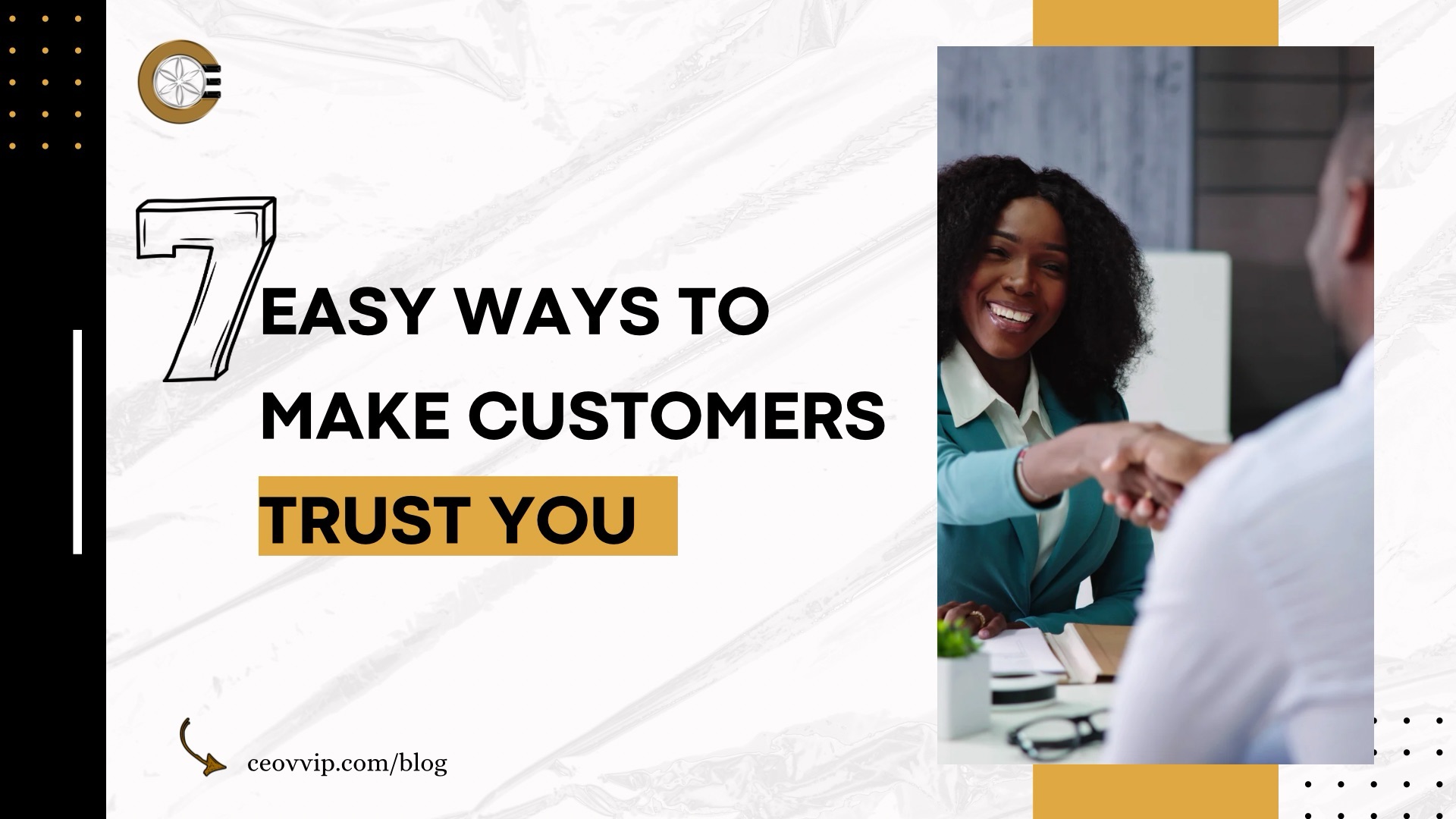
  • 7 Easy Ways to Make Customers Trust You

    7 Easy Ways to Make Customers Trust You

    Let me ask you this—what’s the one thing that separates businesses that win long-term from those that fizzle out? 

    It’s trust. 

    Without trust, customers won’t stick around. They’ll try your product or service once and never come back. But here’s the thing: trust isn’t just built with a smile or a smooth sale. It’s deeper than that. 

    So, how do you build customer trust? Let’s dive into 7 easy ways that can take your business to the next level.

    Here are 7 Easy Ways to Make Customers Trust You

    • Be Transparent (No SugarCoating)
    • Deliver Consistently (No Empty Promises)
    • Show Empathy (Understand Their Pain)
    • Be Accessible (Connect and Respond)
    • Offer Value, Not Just Products (Educate Your Audience)
    • Admit Your Mistakes (And Fix Them Fast!)

    Related Post: Brand Success Isn’t About Logos—It’s About the Experience

     1. Be Transparent (No SugarCoating)

    In today’s world, customers want brands to keep it real. A study by Label Insight found that 94% of consumers are more loyal to brands that offer transparency. Whether it’s the price of your services, your delivery timelines, or even an occasional mistake—be open about it. Trust grows when customers know they’re not being tricked. One Nigerian fintech startup, for example, built a solid base of over 500,000 users simply by showing detailed transaction reports with no hidden fees.

    Paystack, a digital payment solution, rose to prominence by focusing on transparency in a market where payment systems are notoriously opaque. By showing every transaction’s cost clearly, they gained the trust of thousands of small businesses in Nigeria.

     2. Deliver Consistently (No Empty Promises)

    Think of trust like a savings account. Every time you meet your customer’s expectations, you deposit a little more into that account. But break a promise—like delivering late or failing to meet service standards—and you’re withdrawing from that trust bank. According to a survey by Salesforce, 76% of customers expect companies to understand their needs and provide a consistent experience.

    Pro Tip: If you say you’ll deliver in 24 hours, stick to it. Even if it costs you a bit more effort. Gary Vaynerchuk, CEO Vayner Media explained how he drove 3hrs to deliver a bottle of wine to his customer in the snow because he already promised delivery.

    Create & Launch Your Digital Product (ebooks, masterclasses, online courses & events) Like A Pro
    Create & Launch Your Digital Product (ebooks, masterclasses, online courses & events) Like A Pro

    3. Show Empathy (Understand Their Pain)

    You’ve probably heard this a million times, but it’s worth repeating—customers don’t care how much you know until they know how much you care. The emotional connection you make with a customer is just as important as your product or service. 

    A powerful example is the Nigerian telecommunications company, MTN, which, after understanding the financial struggles of students, rolled out student-friendly data plans. This simple act of empathy earned them millions of loyal young customers.

     4. Use Social Proof (Let Others Vouch for You)

    Customers trust people more than they trust businesses. That’s why testimonials, case studies, and reviews are pure gold. In fact, 91% of people regularly read reviews, and 84% trust them as much as personal recommendations (BrightLocal). Show real-life success stories, not just flashy sales copy. 

    Consider this: the beauty brand Zaron Cosmetics expanded across West Africa by sharing real customer testimonials and influencer endorsements on their social media platforms. Their “Before & After” transformations resonated so much that they became a go-to beauty brand for thousands of women.

    CEOVIP

     5. Be Accessible (Connect and Respond)

    Ever try reaching out to a brand and it feels like shouting into the void? Frustrating, right? Your customers feel the same way when they can’t get through to you. One of the fastest ways to lose trust is by being unreachable.

    In a survey by Zendesk, 66% of customers said they switched brands due to poor customer service. Being available—whether through social media, phone, or email—shows your customers that you’re listening. Zenith Bank leads the pack by offering multiple channels for customer support, with their social media team responding within minutes, helping the brand to retain over 90% of their online customer interactions.

     6. Offer Value, Not Just Products (Educate Your Audience)

    Customers trust brands that help them improve their lives. Offering tips, advice, and relevant content shows that you’re not just there to sell but also to support them. In Nigeria’s competitive real estate market, PropertyPro.ng built a loyal audience by publishing guides on real estate investment, property maintenance, and market trends. The trust they earned through education translated into more business, with a 50% increase in repeat users.

    Think about it like this: If you’re in the service industry, offer free workshops, webinars, or even a simple blog with actionable advice. The more you empower your customers, the more trust you build.

     7. Admit Your Mistakes (And Fix Them Fast!)

    You’re human, and so is your business. Mistakes happen, and customers know that. But how you handle those mistakes can either make or break trust. When things go wrong, don’t hide it. Own up and fix it as quickly as possible. 

    Uber had to face a backlash in Nigeria due to pricing confusion when it first launched. But instead of brushing it under the carpet, they immediately addressed the issue, offered refunds, and communicated clearly with their users. The result? Customers not only forgave them but grew more loyal because of the transparency.

     Final Thoughts: Trust is the Currency of Business

    In the West African market, where consumers are more informed and connected than ever, trust is a priceless currency. Whether you’re offering professional services, running a restaurant, or managing a digital agency, these seven strategies can help you build and sustain the trust of your customers. 

    And the best part? Building trust isn’t just about being a nice brand—it directly impacts your bottom line. In a 2023 study, businesses that focused on trust saw an average 25% increase in customer retention and a 20% rise in overall revenue within the first year. In fact, 83% of consumers in Nigeria said they would recommend a brand they trust to others.

    So, how are you going to start building trust today?

    By following these steps, you can create relationships with your customers that last—because when people trust you, they stick around, and they bring their friends.
  • How to Choose the Right CRM to Grow Your Small Business

    How to Choose the Right CRM to Grow Your Small Business

    Running a small business often feels like juggling—clients, marketing, team communication, and sales, all competing for your attention. The right CRM (Customer Relationship Management) tool can be your ace in the hole.

    It doesn’t just help you manage customer relationships. It automates tasks and nurtures leads. It also provides insights that help you grow smarter, faster, and with more confidence.

    When you find the best CRM for your business, it’s like turning on a new part of your brain. Things start to click. Tasks get done faster, and your business scales naturally. But how do you know which CRM will unlock that magic for you?

    Let’s explore the features and advantages of a few standout CRM tools. We will also look at some real-world stories of entrepreneurs just like you. They found success with the right CRM.

    Related Post: What Apple’s Marketing Genius Can Teach You About Selling Digital Products

    Why You Need a CRM (Even If You’re a Small Business)

    If you’ve ever felt overwhelmed by all the follow-ups, customer queries, or missed opportunities, you’re not alone. A study by Salesforce found that 82% of small business leaders believe their customers now expect them to understand their needs more than ever. This demand for personalized experiences can be tough without the right tools.

    A CRM helps you stay on top of each customer interaction. It remembers the details when you don’t have the bandwidth. Imagine walking into a meeting, knowing exactly what your client needs without having to dig through notes. The best part? It’s all automated.

    Top CRM Options for Small Businesses

    1. HubSpot CRM – The All-in-One Free Tool

    HubSpot offers a free CRM that’s perfect for small businesses looking to streamline operations without breaking the bank. You get unlimited users and up to 1 million contacts, which means your CRM grows with you. It’s designed to help you scale with features like email marketing, lead nurturing, and sales pipeline tracking.

    Take the story of Growth Geeks, a small digital marketing agency. They were struggling to keep track of client leads, proposals, and follow-ups across multiple tools. By integrating HubSpot CRM, they streamlined their communications. They also increased sales follow-ups by 35%. This led to a noticeable boost in closed deals.

    2. Zoho CRM – Customization at Your Fingertips

    For businesses that need flexibility and custom features, Zoho CRM is ideal. You can build workflows tailored to your business processes, whether it’s managing new leads, automating emails, or even sending proposals.

    Zoho CRM has been shown to increase lead conversion rates by 300% for small businesses using its automation features. The beauty here is that Zoho offers CRM tools that fit your budget, with tiered pricing for growing businesses.

    Real Estate business RAY Properties used Zoho CRM to automate lead tracking and follow-up processes. They saw a 40% reduction in administrative tasks within the first 6 months, allowing them to focus more on closing deals and less on operational details.

    3. Salesforce Essentials – Power in Simplicity

    Salesforce is a leader in CRM, but Salesforce Essentials was built specifically for small businesses. It’s like getting enterprise-level power with small-business simplicity. One of its standout features is AI-powered recommendations, which helps you prioritize leads and make smarter decisions faster.

    Think about New York-based boutique marketing firm, Bright Agency. They adopted Salesforce Essentials to help streamline client communications. As a result, they saw a 20% increase in client retention. They could engage more meaningfully with customers and anticipate their needs.

    4. Pipedrive – The Sales-Driven CRM

    Pipedrive is for businesses that live and breathe sales. Its intuitive, visual interface allows you to track every deal in your pipeline and know exactly where each one stands. What sets Pipedrive apart is its emphasis on actions that close sales, from scheduling calls to sending emails.

    Pipedrive users close 28% more deals on average after their first year of use.

    A small IT firm, Tech Solutions, switched to Pipedrive after outgrowing their spreadsheets. They saw a 25% increase in sales productivity. This was achieved by having clearer visibility into their sales pipeline. They also received a nudge to take the next steps with prospects.

    Bossmoney Formula: The Ultimate Launch Blueprint For Your Ebook, Masterclass, Online Course & Virtual Events
    Bossmoney Formula: The Ultimate Launch Blueprint For Your Ebook, Masterclass, Online Course & Virtual Events

    How to Choose the Best CRM for Your Business

    Choosing the right CRM depends on your current position in your business journey. You also need to identify what your team needs most. Here are a few questions to ask:

    • Do you need automation? Tools like Zoho and HubSpot excel here.
    • Do you rely on sales pipelines? Pipedrive or Salesforce might be your best bet.
    • Do you need to manage multiple client touchpoints? HubSpot’s integration features can help streamline that process.

    Statistics show that 87% of small businesses that implement a CRM see significant improvements in customer satisfaction. They also experience better retention within the first year. Imagine what that could mean for your business—not just more sales, but happier, loyal customers who keep coming back.

    The Future of Your Business, Simplified

    At the heart of it, a CRM is more than just a tool—it’s a strategy. It empowers you to serve your clients better, manage your time more effectively, and scale your business with confidence. Picture this: each lead automatically nurtured, every follow-up perfectly timed, and customers receive personalized attention at every turn. That’s the power of the right CRM.

    When you choose the best CRM for your business, you aren’t just buying software—you’re unlocking a new level of potential. HubSpot offers a free all-in-one system. Zoho provides custom workflows. Salesforce delivers AI-powered insights. Pipedrive focuses on sales-driven strategies. The right CRM can be your secret weapon for scaling without the stress.

    Read more: